

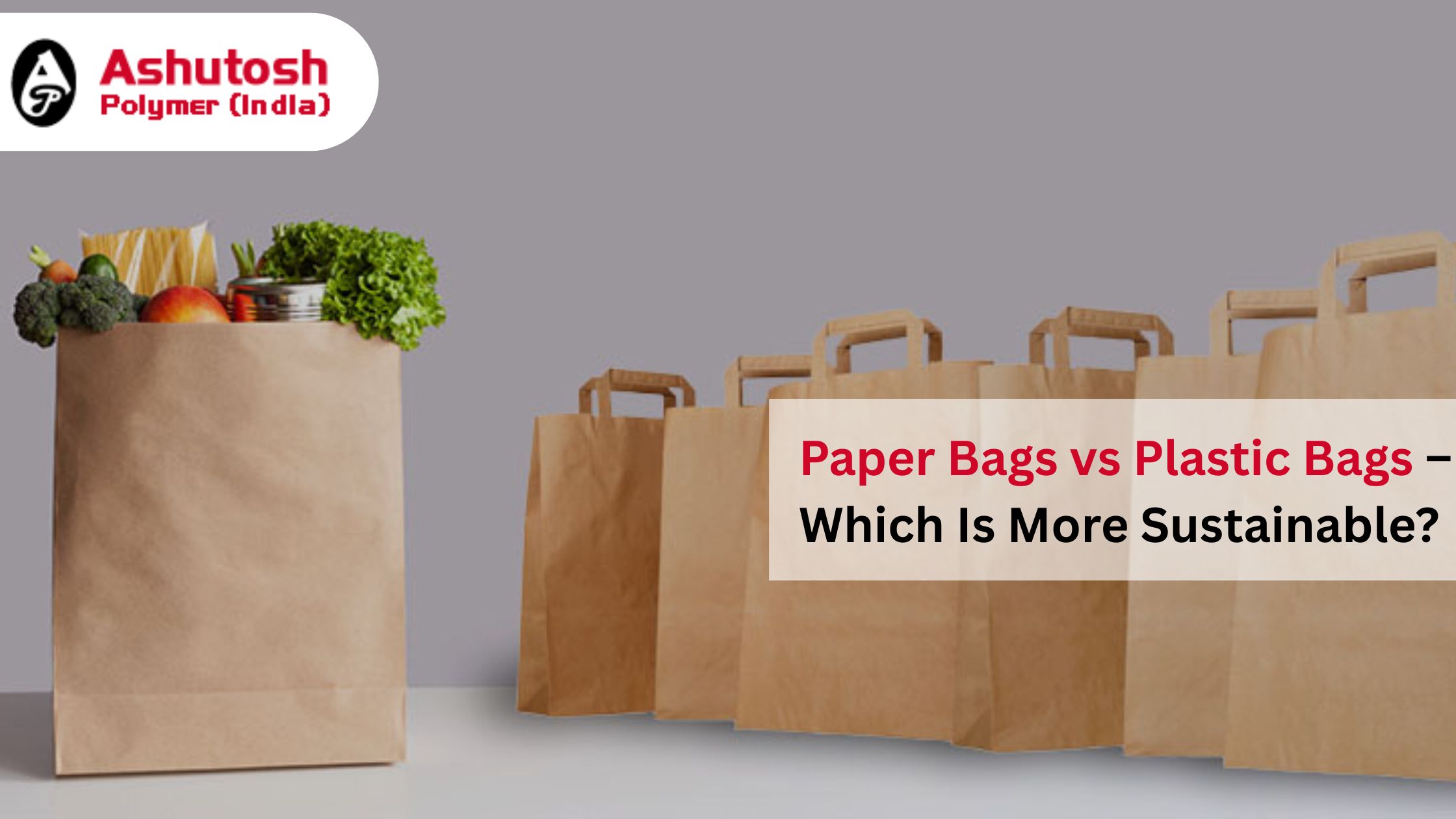
Paper Bags vs Plastic Bags – Which Is More Sustainable?
In today’s environmentally conscious world, businesses and consumers are constantly debating Paper Bags vs Plastic Bags. With growing awareness about sustainable packaging solutions, many brands are rethinking their packaging choices.
At Ashutosh Polymer, we understand that sustainability is not just about choosing one material over another — it’s about understanding the complete environmental impact and making responsible decisions.
So, which is truly more sustainable? Let’s break it down.
Understanding the Environmental Impact
When comparing paper bags and plastic bags, it’s important to evaluate their full lifecycle — from raw material extraction to disposal.
Paper Bags:
- Made from trees (renewable resource)
- Biodegradable
- Widely recyclable
- Requires significant water and energy for production
- Heavier, leading to higher transportation emissions
Plastic Bags:
- Made from petroleum (non-renewable)
- Lightweight
- Lower manufacturing energy use
- Long decomposition time
- Can be recycled but often improperly disposed
At Ashutosh Polymer, we always encourage customers to consider lifecycle impact rather than just surface-level perceptions.
Manufacturing Process Comparison
Paper Bag Manufacturing Process
The production of paper bags involves:
- Tree harvesting
- Pulping and chemical processing
- Drying and shaping
This process consumes large quantities of:
- Water
- Electricity
- Chemicals
While paper is biodegradable, its manufacturing footprint is relatively high.
Plastic Bag Production
Plastic bags are manufactured using polymer resins derived from petroleum. Compared to paper:
- Less water is required
- Lower production energy is consumed
- Emissions during manufacturing are comparatively lower
As a polymer-focused company, Ashutosh Polymer emphasizes responsible plastic production and improved recyclability to reduce environmental harm.
Biodegradability and Decomposition
This is where paper bags gain a strong advantage.
Paper Bags:
- Decompose in weeks or months
- Leave no toxic residue
- Safe for composting
Plastic Bags:
- Take 100–500 years to decompose
- Break down into harmful microplastics
- Cause marine and wildlife pollution
The long-term environmental impact of plastic waste is a serious global concern. That’s why at Ashutosh Polymer, we advocate better waste management and recyclable material innovation.
Recycling and Reusability
Recycling is a key factor in sustainable packaging.
Paper Bags:
- Easily recyclable
- Accepted in most recycling programs
- Fibers weaken after multiple cycles
Plastic Bags:
- Technically recyclable
- Require specialized recycling facilities
- Often reused multiple times at home
Interestingly, studies suggest that paper bags must be reused 3–4 times to offset their production footprint, while plastic bags require multiple reuse cycles to balance environmental impact.
Promoting reuse is essential. Ashutosh Polymer supports packaging solutions that are designed for durability and extended lifecycle usage.
Carbon Footprint Comparison
A carbon footprint comparison reveals interesting facts:
- Paper bags produce higher CO? emissions during manufacturing.
- Plastic bags have a lower initial carbon footprint.
- Transportation emissions are higher for paper due to weight.
- Improper disposal of plastic causes long-term environmental damage.
Sustainability depends heavily on how responsibly the product is used and disposed of — not just the material itself.
Cost, Durability & Business Perspective
For businesses, sustainability must align with practicality.
Paper Bags:
- Higher production cost
- Premium eco-friendly brand image
- Ideal for retail, fashion, and gifting
Plastic Bags:
- Cost-effective
- Water-resistant
- Stronger load-bearing capacity
At Ashutosh Polymer, we work with businesses to provide reliable, recyclable, and responsible packaging materials that balance performance with environmental responsibility.
Government Regulations & Market Trends
Many governments worldwide have imposed restrictions on single-use plastic bags. This has increased demand for:
- Biodegradable alternatives
- Recyclable plastic solutions
- Sustainable packaging innovations
Consumers today prefer brands that demonstrate environmental responsibility. Businesses partnering with companies like Ashutosh Polymer can align their packaging with evolving sustainability standards.
So, Which Is More Sustainable?
There is no one-size-fits-all answer.
Paper bags are better in terms of:
- Biodegradability
- Recycling accessibility
- Reduced long-term pollution
Plastic bags are better in terms of:
- Lower production energy
- Lightweight transportation
- Durability and reuse potential
The most sustainable solution is reducing single-use consumption and promoting reusable packaging.
At Ashutosh Polymer, we believe that innovation, recycling awareness, and responsible usage are the real keys to sustainability.
Conclusion
The debate over Paper Bags vs Plastic Bags shows that sustainability is more complex than it appears. Paper bags offer environmental advantages in biodegradability and reduced long-term waste impact. Plastic bags, however, require fewer resources during production and are highly durable.
Ultimately, the most sustainable choice depends on:
- Responsible production
- Consumer reuse habits
- Proper recycling systems
At Ashutosh Polymer, we are committed to supporting sustainable packaging practices by offering responsible polymer-based solutions that reduce environmental impact while maintaining product performance.
A greener future depends on smarter decisions — and those decisions start today.
Looking for reliable and sustainable packaging materials?
Partner with Ashutosh Polymer for innovative, recyclable, and high-quality packaging solutions tailored to your business needs.
Visit https://ashutoshpolymer.com today and explore eco-conscious packaging options.
FAQs
1. Are paper bags more sustainable than plastic bags?
Paper bags are biodegradable, but they require more resources to produce. Sustainability depends on reuse and recycling practices.
2. Why does plastic have a lower production carbon footprint?
Plastic bags require less water and energy during manufacturing compared to paper bags.
3. How can plastic bags be made more sustainable?
Through recycling programs, reuse initiatives, and responsible disposal — approaches promoted by companies like Ashutosh Polymer.
4. Which bag is better for businesses?
It depends on usage. Paper is good for branding and eco-image, while plastic offers durability and cost-efficiency.
5. What is the best sustainable packaging option?
Reusable packaging is the most sustainable option over single-use paper or plastic bags.